
Sales floor and fixtures
Floors, fixture bases, shelf edges, and display surfaces cleaned so merchandise presents properly under retail lighting, which is far less forgiving than office lighting.
Industry · Retail
Sales floors, fitting rooms, and entry glass maintained so the shopping environment supports the sale rather than undermining it.
The environment sells too
Retail has a direct and well-documented relationship between how a store presents and what it sells. Customers extend judgements about a dusty fixture or a poor fitting room to the merchandise itself, and lighting designed to make products look good makes dull floors and smeared glass equally obvious.
Retail also has the longest operating hours of any commercial category. Stores open early, close late, and trade seven days, which leaves an overnight or pre-open window and nothing else. During the holiday season that window compresses further while traffic is at its highest, exactly when the store most needs to look good.
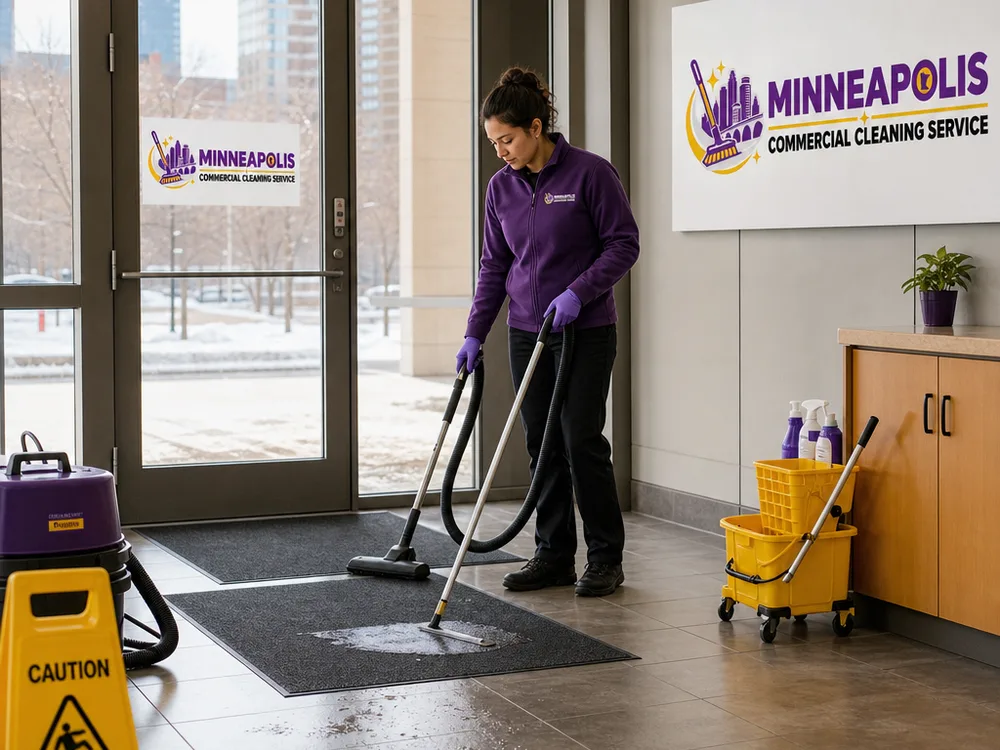
Then there is Minnesota winter. Retail entries take salt, slush, and grit continuously from December through March, tracked straight onto the selling floor. Without a proper entry matting and floor programme, a retail floor degrades visibly in a single season, and it degrades most during the months when you take the most revenue.
What is included
Every scope is built for the specific building. These are the areas most retail plans cover, with frequencies set during the walkthrough.
Floors, fixture bases, shelf edges, and display surfaces cleaned so merchandise presents properly under retail lighting, which is far less forgiving than office lighting.
Mirrors, benches, hooks, floors, and corners in the space where a customer is alone, stationary, and looking closely. Poor fitting rooms lose sales that were otherwise made.
Storefront glass, entry doors, and display cases cleaned on both sides, including winter salt haze on lower panels and the frames and tracks.
Cleaned at retail frequency, which is driven by footfall rather than staff headcount, with consumables managed to match.
High-touch surfaces at the point of sale, plus the floor behind counters where staff stand all day and ordinary cleaning routes skip.
Staff areas, break rooms, and stockrooms kept usable, since they affect staff experience and how quickly stock moves to the floor.
How we approach it
The retail cleaning window is fixed and narrow, so the practical question is whether a cleaner can consistently work inside it. Overnight or pre-open service is standard, and it has to be reliable, because a store that opens with the previous day's floor is a visible problem from the first customer.
Seasonal peaks need planning rather than improvisation. Through the holiday period, traffic can double or triple while trading hours extend. That usually means increased frequency on entries, restrooms, and fitting rooms for a defined period, agreed in advance rather than negotiated in December.
Winter is the other planned variable. Entry matting sized properly, more frequent entry-area attention, and appropriate hard-floor care through the salt season protect a floor that would otherwise need refinishing far sooner. It is the cheapest floor care decision a Minneapolis retailer can make.
Getting started
Four steps, no long sales process. Most retail clients go from first call to first service inside a couple of weeks.
Check AvailabilityWe walk the building with you, look at how each area is actually used, and note what matters: traffic patterns, flooring, access and security requirements, and anything a previous cleaner kept missing.
You get it in writing: what is cleaned, how often, and when. The schedule is set around your operating hours rather than around ours.
If the building has been under-served, a one-time detail clean sets the baseline before recurring service begins, so the ongoing scope maintains a standard rather than chasing a backlog.
The same crew works your building so standards hold. We run periodic quality checks rather than waiting for a complaint, and adjust the scope as things change.
Pricing
Retail pricing follows footfall and floor type. A store with high traffic, fitting rooms, and extensive glass takes considerably more time than a low-traffic showroom of equal size, and seasonal peaks are usually priced as a defined uplift rather than absorbed.
Square footage and the number of restrooms, which drive most of the labour time
Visit frequency, from a couple of times a week through to daily service
Flooring mix, since hard-floor care and carpet care need different time and equipment
How heavily the space is used, and whether it is public-facing
Any add-ons such as consumables, interior glass, or periodic deep cleaning
We quote after walking the building rather than over the phone. A scope guessed from a square-footage figure is the usual reason a cleaning price changes three months in.
Common questions
Yes, and one of those is the normal arrangement for retail. We set the window around your trading hours, including different hours at weekends and during seasonal periods.
Yes. We plan seasonal increases in advance, typically on entries, restrooms, and fitting rooms, so the store holds its standard through the busiest weeks rather than degrading through them.
Yes. Entry glass, display cases, and interior glass are part of the retail scope, with frequency set by exposure since entry glass needs far more attention than interior display glass.
Entry matting, increased entry-area frequency, and appropriate floor care through the season. Prevention at the door is significantly cheaper than refinishing a damaged floor in spring.
Yes. Multiple locations get the same written scope and standard, with consistent crews per store so each location has people who know the space.
Services for this sector
Service area
Based in Minneapolis and working with businesses throughout the metro.
Get started
Tell us how your space is used and what has not been working. We walk the building, put the scope in writing, and give you a price with no guesswork.