
Lobbies and teller areas
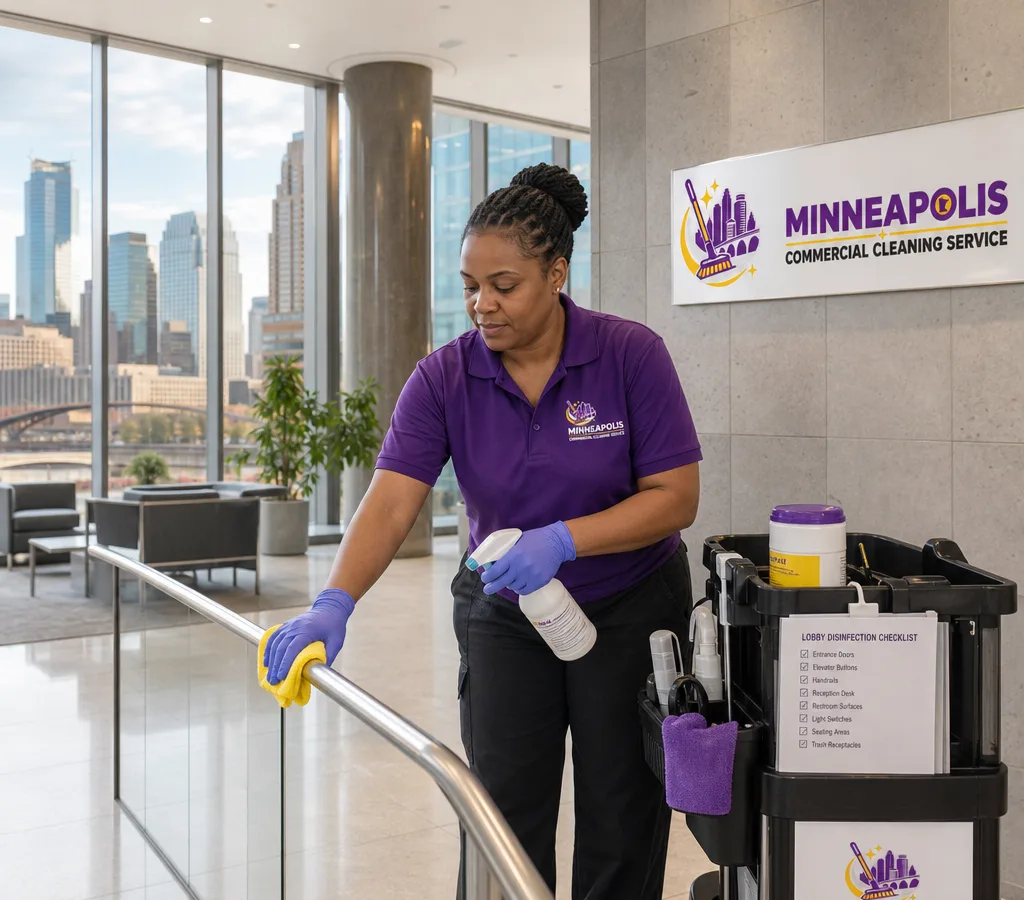
Client-facing spaces including counters, queuing areas, floors, and seating, maintained so the branch looks composed at opening every day.
Industry · Financial institutions
Branches, credit unions, and financial offices cleaned by screened, consistent crews working within your security procedures.
Trust is the product
Financial institutions sell confidence, and the physical environment is part of the argument. A branch or advisory office that looks composed and well maintained supports the impression that the organisation is careful with details. One that looks neglected quietly undercuts it, in a category where clients are already alert to signals about competence.
The other defining feature is security. Cleaning crews work after hours in buildings containing cash handling areas, client records, and secure zones. That makes who is in the building at least as important as how well they clean, and it is why rotating crews are unacceptable here even though they are common elsewhere in the industry.
We staff financial accounts with screened crews who stay consistent for that building, work within your access and alarm procedures, and understand which areas are restricted. All of that is agreed and documented before the first visit rather than worked out as we go.
What is included
Every scope is built for the specific building. These are the areas most financial institutions plans cover, with frequencies set during the walkthrough.
Client-facing spaces including counters, queuing areas, floors, and seating, maintained so the branch looks composed at opening every day.
Advisory offices and private meeting rooms reset between uses, since these are where clients have longer, more consequential conversations.
Entry vestibules and ATM surrounds, which are public-facing, heavily used, and in winter take the full weight of salt and moisture.
Counters, pens and shared surfaces, door hardware, and queue fittings on a defined frequency rather than as part of a general pass.
Client and staff restrooms, break rooms, and back-office areas maintained to a consistent standard.
Entry glass, teller screens, and interior glass cleaned on both sides, including the winter haze that builds on lower panels.
How we approach it
For most commercial cleaning, access arrangements are a practical detail. For a financial institution they are a control, and they need to be handled that way: documented, agreed, and followed by a known crew rather than explained verbally to whoever is working that night.
Before the first service we confirm access and alarm procedures, restricted areas and any escort requirements, screening and identification for every assigned crew member, and the process for changing crew if that ever becomes necessary. It is a short conversation, and having it up front avoids the situation where a compliance question arrives and nobody can answer it.
Consistency then does most of the ongoing work. The same screened people in the building each visit is both better security and better cleaning, because they learn the space and its requirements rather than starting from nothing every night.
Getting started
Four steps, no long sales process. Most financial institutions clients go from first call to first service inside a couple of weeks.
Check AvailabilityWe walk the building with you, look at how each area is actually used, and note what matters: traffic patterns, flooring, access and security requirements, and anything a previous cleaner kept missing.
You get it in writing: what is cleaned, how often, and when. The schedule is set around your operating hours rather than around ours.
If the building has been under-served, a one-time detail clean sets the baseline before recurring service begins, so the ongoing scope maintains a standard rather than chasing a backlog.
The same crew works your building so standards hold. We run periodic quality checks rather than waiting for a complaint, and adjust the scope as things change.
Pricing
Financial facility pricing reflects branch size, the number of client-facing areas, and any escort or security requirements that affect how the work is carried out. Screened, consistent crews are a fixed part of the scope rather than an upgrade.
Square footage and the number of restrooms, which drive most of the labour time
Visit frequency, from a couple of times a week through to daily service
Flooring mix, since hard-floor care and carpet care need different time and equipment
How heavily the space is used, and whether it is public-facing
Any add-ons such as consumables, interior glass, or periodic deep cleaning
We quote after walking the building rather than over the phone. A scope guessed from a square-footage figure is the usual reason a cleaning price changes three months in.
Common questions
Yes. Crews assigned to financial institutions are screened, identified, and stay consistent for that building. We do not rotate unfamiliar staff through secure sites.
Yes. Access, alarm procedures, restricted areas, and escort requirements are confirmed in writing before the first visit and followed by the assigned crew.
Only where you specifically authorise it and under whatever escort or supervision your procedures require. Most institutions exclude these areas, and we scope around that without argument.
Almost always after hours, so the branch is fully reset before opening. The exact window is set with your operations or security team.
Yes. Multi-branch institutions get one written standard applied at every location, with consistent screened crews per site.
Services for this sector
Service area
Based in Minneapolis and working with businesses throughout the metro.
Get started
Tell us how your space is used and what has not been working. We walk the building, put the scope in writing, and give you a price with no guesswork.